Spacex Closes Billionaire Agreement with IA Open Source Reflection: $6.3 billion per Chips Nvidia in Data Center
SpaceX will provide access to Nvidia GB300 chips for the IA open source Reflection startup, with payments of $150 million monthly from 2026.
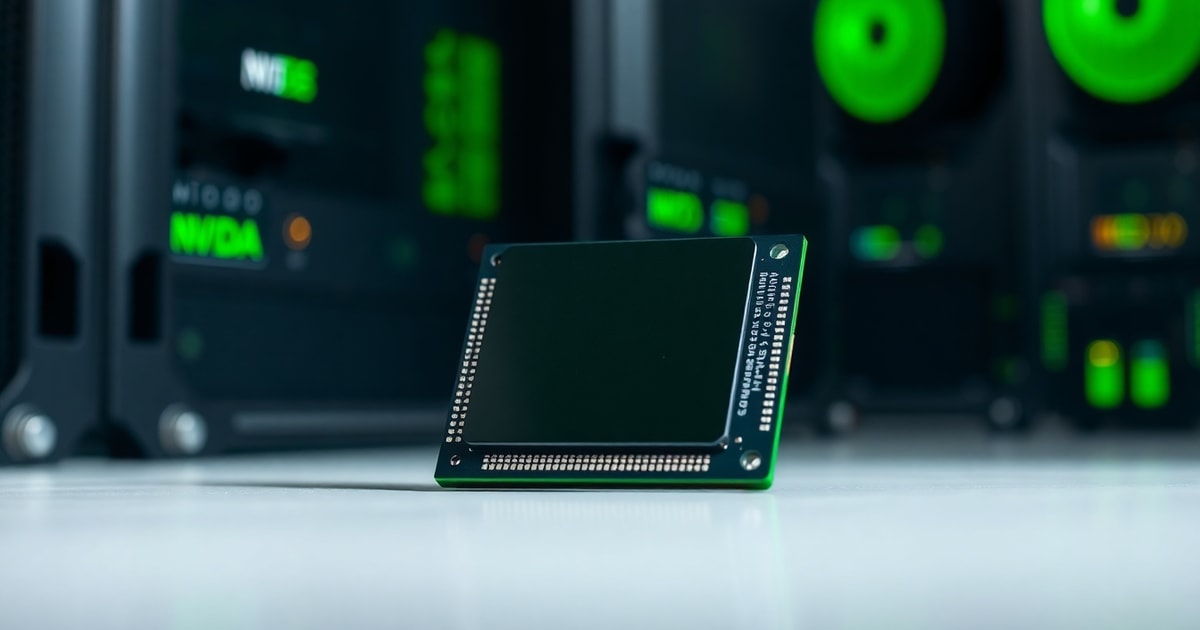
SpaceX has closed a historical magnitude computing agreement with the open source Reflection artificial intelligence startup, supported by Nvidia. The contract gives Reflection access to Nvidia's GB300 chips at the Colossus 2 data center in Memphis, with monthly payments of US$ 150 million from July 2026, totaling about US$ 6.3 billion by 2029, according to information from CNBC. The movement signals SpaceX's aggressive entry into the computer capacity rental market for AI, directly competing with traditional cloud providers.
Why is Colossus 2 strategic for AI with Nvidia chips?
Colossus 2 is SpaceX's state-of-the-art data center designed to support massive training and inference workloads for artificial intelligence models. Located in Memphis, Tennessee, the center houses thousands of Nvidia’s GB300 chips — H100 successors — that offer up to 30% superior performance in generational AI tasks. By renting capacity to third parties, SpaceX transforms its internal infrastructure into a profitable business, competing with Amazon AWS, Microsoft Azure and Google Cloud. Microsoft expands AI capacity with data center in Pecos, Texas, but SpaceX bets on long-term contracts with high-growth startups.
How does Reflection, startup open source of AI, benefit?
Reflection is known for developing open source AI models, a decentralised alternative to proprietary systems such as GPT-4 or Claude. With guaranteed access to thousands of GB300, startup will be able to train larger models and faster, reducing operating costs. The five-year contract eliminates the volatility of the GPU spot market, giving financial predictability. In addition, the partnership with Nvidia — which has already invested in Reflection — indicates that startup has become a strategic hub for the open source AI race. Instead of relying on public clouds, Reflection will have dedicated capacity in an elite data center.
What does the SpaceX-Reflection agreement reveal about the future of AI computing?
The agreement demonstrates that large infrastructure companies — including aerospace such as SpaceX — are consolidating themselves as key providers of computational power for AI. Demand for Nvidia chips remains insatiable, and companies like Reflection need capacity guarantees to scale. SpaceX, with its history of innovation in reusable rockets, now applies the same efficiency mentality to data centers. This also pushes traditional cloud providers to offer more flexible contracts and competitive prices. The fact that the payment starts only in 2026 suggests that the installation of Colossus 2 is still expanding, but Reflection is willing to wait for a higher infrastructure.
Frequently Asked Questions
What is the total contract value between SpaceX and Reflection?
The contract provides monthly payments of US$ 150 million from July 2026, amounting to approximately US$ 6.3 billion by the end of 2029.When do payments start and which chips will be used?
Monthly payments begin in July 2026, and the infrastructure will be based on Nvidia's GB300 chips, installed at SpaceX's Colossus 2 data center in Memphis.Why does Reflection, being open source, need so much computational capacity?
Training large-scale open-source AI models requires huge amounts of GPUs; the contract guarantees dedicated and predictable access to thousands of state-of-the-art chips, something essential for competing with giants like OpenAI and Google.Source: www.cnbc.com

Written by
Manu RamalhoSou Manu Ramalho, publicitária com 16 anos de estrada conectando marcas e pessoas. Como fundadora da EME Marketing Digital, sempre busquei o marketing estratégico para gerar conexões autênticas. Aqui, mergulho na fronteira da inteligência artificial como analista de tendências. Meu foco é traduzir a complexidade de NLP, novos modelos de linguagem e papers acadêmicos para o mundo real, sempre com um olhar atento à regulamentação, ética e aos impactos sociais que essa tecnologia imprime na nossa sociedade.
Related articles

Mistral Large 4 (Le Chonk) sai com pesos abertos e estreia na Microsoft Foundry
A Mistral lançou o Mistral Large 4, apelidado de Le Chonk, como modelo de pesos abertos, e a Microsoft é a primeira nuvem a oferecê-lo via Microsoft Foundry.

NVIDIA prepara PCs para IA local: RTX Spark ganha ecossistema global e roteador open-source
A NVIDIA afirma que o ecossistema global de aplicativos para PC está pronto para o RTX Spark e coloca no centro do anúncio o Switchyard, biblioteca open-source que alterna consulta...
Por que operadoras de telecom estão migrando para modelos abertos de IA
Operadoras de telecom estão construindo suas estratégias de IA sobre modelos abertos para ganhar flexibilidade e segurança, distribuindo cargas entre nuvem pública, infraestrutura...