Digital Sovereignty: How Countries Build AI Infrastructure for Strategic Priorities
NVIDIA reveals how governments around the world are investing in infrastructure, data, talent and business networks to ensure digital sovereignty and drive strategic priorities in health, defense and...
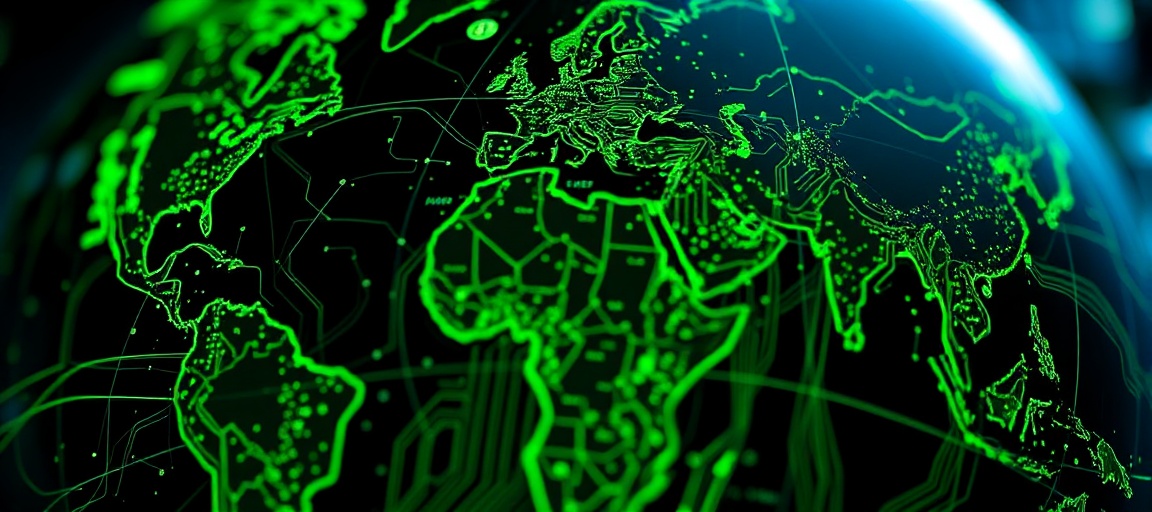
In a movement that redefines technological geopolitics, nations from all continents are building their own artificial intelligence infrastructure (IA) to meet strategic priorities such as health, defense and digital economy. According to NVIDIA, this race for digital sovereignty involves not only hardware, but also data, local talent and business networks that allow you to perform AI models independently (Source).
Why is digital sovereignty a global priority in the AI era?
The dependence on foreign AI infrastructure — especially American and Chinese giants — led governments to rethink their technological autonomy. NVIDIA points out that countries such as India, Japan, France and Singapore have already announced national AI plans with billion-dollar investments. The logic is clear: controlling your own data and models is essential for national security, economic competitiveness and innovation in critical sectors.
How do nations build AI infrastructure for sovereignty?
The revenue involves four pillars: computing infrastructure (GPUs and data centers), data (local accuracy and annotation), talent (training of engineers and data scientists) and business networks (public-private partnerships). NVIDIA highlights the example of Japan, which is setting up one of the world's largest AI-focused supercomputers, and France, which announced a state-of-the-art cluster of chips from the manufacturer. To make this possible, companies like French ZML have created solutions that allow running AI on any chip — including AMD GPUs and Google TPUs — democratizing infrastructure access (read more about ZML).
What is the role of data, talent and networks in digital sovereignty?
Local data is the raw material of digital sovereignty. Countries like India are building specific datasets for regional languages and cultures, while the European Union focuses on privacy and compliance with GDPR. Talent, in turn, is cultivated with training programs in universities and partnerships with big techs. Business networks connect startups, research institutes and governments, accelerating the adoption of AI in sectors such as agriculture, health and defense.
What does NVIDIA advocate for digital sovereignty and AI?
The GPU manufacturer argues that the AI infrastructure does not need to be a monopoly. With open platforms and strategic partnerships, any nation can create its own AI ecosystem, maintaining control over its data and models. The original NVIDIA report reinforces that digital sovereignty is both a matter of security and economic opportunity — and that the moment of action is now.
Frequently Asked Questions about Digital Sovereignty
Which countries are leading the implementation of strategic AI?
India, Japan, France, Singapore and several others announced national AI plans focused on local infrastructure, data and talent.
Why is digital sovereignty important to the AI?
It allows governments to control sensitive data, avoid external dependence, and direct technology to national priorities such as health and defense.
How does NVIDIA contribute to this trend?
Providing GPUs and software platforms that allow building high-performance data centers, as well as supporting training initiatives and innovation networks.
Source: blogs.nvidia.com

Written by
Manu RamalhoSou Manu Ramalho, publicitária com 16 anos de estrada conectando marcas e pessoas. Como fundadora da EME Marketing Digital, sempre busquei o marketing estratégico para gerar conexões autênticas. Aqui, mergulho na fronteira da inteligência artificial como analista de tendências. Meu foco é traduzir a complexidade de NLP, novos modelos de linguagem e papers acadêmicos para o mundo real, sempre com um olhar atento à regulamentação, ética e aos impactos sociais que essa tecnologia imprime na nossa sociedade.
Related articles

Anthropic protocola IPO e mira a maior estreia da bolsa — com alerta de risco existencial
A Anthropic, criadora do Claude, apresentou os documentos para abrir capital nos EUA, em uma operação que pode se tornar o maior IPO da história.
Anthropic inclui o Brasil na política de regiões suportadas para Claude e serviços
A Anthropic publicou a lista oficial de países e regiões onde seus produtos e serviços estão disponíveis, e o Brasil aparece entre eles.

FDA exige validação de algoritmos de IA em ensaios clínicos: o que muda para patrocinadores
Nova orientação da FDA obriga patrocinadores de ensaios clínicos a validar formalmente algoritmos de IA usados em operações de estudo, estendendo à camada de algoritmo as exigência...