Casper Police adopts AI to analyze body cameras and write reports
The Casper municipal council at Wyoming approved the purchase of the Truleo platform, which uses AI to transcribe, categorize and evaluate recordings of police's body cameras.
Key takeaways
- O conselho municipal de Casper, no Wyoming, aprovou a compra da plataforma Truleo em 2024.
- A Truleo usa IA para transcrever, categorizar e avaliar gravações de câmeras corporais policiais.
- Departamentos de polícia recorrem à ferramenta para automatizar relatórios e monitorar condutas.
- A adoção da IA na atividade policial levanta riscos de privacidade e viés algorítmico.
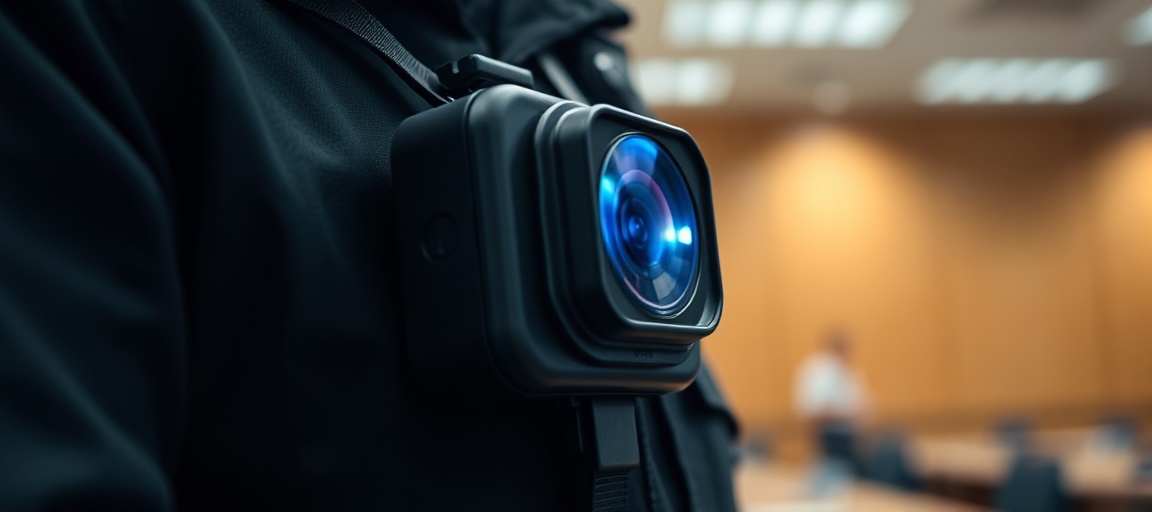
Casper City Council in the U.S. state of Wyoming approved the purchase of the Truleo platform, which uses artificial intelligence to transcribe and analyze recordings of police's body cameras. In practice, the tool begins to categorize the recorded material, evaluate how agents conduct interactions with the public and support the writing of incident reports. The decision was registered by the local portal Oil City News.
What the Truleo platform does in practice with AI
The system operates on three fronts described in the approved proposal. The first is the automatic transcription of the audio captured by the body cameras, which transforms hours of recording into searchable text. The second is the categorization of images and excerpts by type of occurrence, which allows the rapid localization of specific situations. The third is the evaluation of interactions between police and citizens, focusing on indicators such as professionalism and conduct during the approach.
It is not a new camera or additional equipment: the investment is software, applied on the material that the department already produces. As the purchase was approved by the municipal council, the contract is signed with public resources and is subject to the typical scrutiny of government purchases.
How AI in body cameras turns recordings into reports
Third use is the most sensitive from an operational point of view. After processing the video and audio of an incident, the tool helps the agent structure the written report, suggesting an initial text from what was recorded. The document continues to be signed by the police officer, but is born from a draft generated by a language model.
This type of flow reduces the time spent on administrative tasks, one of the main arguments for adoption. Human review remains necessary, which shifts the effort of writing agents to the conference of automated content. It is a pattern similar to what has been adopted in journalistic essays, as shown by the adoption of AI in E.W. Scripps communication.
Why police departments resort to AI on body cameras
Body cameras became popular as a response to charges for transparency and accountability. The side effect was the volume: each shift generates recordings that are hardly fully assisted by supervisors, and the routine manual review ends up being sampling or reactive — it happens when there is complaint or process.
The AI enters precisely to make this collection accessible on a scale, either for training or to identify patterns of conduct or risks. It is the same value extraction logic in large image and video databases that appears in automated verification tools, as in the case of Google tool to investigate manipulated images.
What risks accompany AI in body cameras in police activity
The first is the opacity of the criteria: when a system classifies an interaction as inadequate, it is necessary to know which metric was used and how to contest it. Trained models with historical data can reproduce biases present in the police approaches themselves. The second is access: the defense in lawsuits tends to ask for the raw records and metadata generated by the analysis, something that requires clear policy of retention and export.
The third is responsibility for the text. If an official report is born from an automatic suggestion, those responsible for any inaccuracies — agent, department or supplier — must be defined before deployment. Details such as contract value, schedule of entry into operation and audit rules were not highlighted in the purchase announcement.
What AI in body cameras means to Brazil
Body cameras programs in Brazilian state police forces have existed for some years and tend to grow, which creates demand for transcription in Portuguese, video indexing and analysis of trained conduct with local data. At the same time, any adoption needs to dialogue with LGPD (Law 13.709/2018), which treats images and audio as personal data, and with the rules of public procurement.
For those who develop, the message is that the market is not only computer vision: it involves audit trail, explanation, access control and integration with occurrence systems. For those who regulate or supervise, the central question is less about technology and more about governance — who audits the algorithm, with what periodicity and with what data.
Frequently Asked Questions about AI in body cameras
What will Casper police use with artificial intelligence?
The Truleo platform, approved by the municipal council, which transcribes and analyzes body camera recordings, categorizes images, evaluates interactions with the public and assists agents in writing incident reports.
Will the AI replace the human analysis of the recordings?
Nope. The proposal is to make the acquis searchable and support administrative tasks; the review and signature of reports remain the responsibility of the police and the department supervisors.
Does this happen in Brazil?
Brazilian state police forces already use body cameras, but the adoption of automated analysis with AI depends on public procurement and compliance with LGPD, which is still under discussion in the country.
Source: oilcity.news

Written by
Lucas MontarroiosSou Lucas Montarroios e dediquei os últimos 15 anos à linha de frente de operações de telecom e data centers. Minha carreira sempre foi pautada por um foco implacável: transformar tecnologia e cenários críticos em oportunidades reais de negócio. No novidades.ia.br, trago essa visão executiva para o universo da IA. Especialista em produtos, mercado e ferramentas práticas de IA. Minha missão aqui é filtrar o ruído do mercado, analisando benchmarks, estratégias de grandes empresas e ferramentas práticas.
Related articles

SoftwareOne leva engenharia de agentes de IA para a AWS Marketplace com método AI-DLC
A SoftwareOne publicou na AWS Marketplace uma oferta de Forward Deployed Engineering voltada à IA agêntica sobre AWS, com equipes embarcadas no cliente e a metodologia AI-DLC.

Mistral Large 4 (Le Chonk) sai com pesos abertos e estreia na Microsoft Foundry
A Mistral lançou o Mistral Large 4, apelidado de Le Chonk, como modelo de pesos abertos, e a Microsoft é a primeira nuvem a oferecê-lo via Microsoft Foundry.

Archetype AI transforma sensores industriais em inteligência operacional com Newton Agents na AWS
A Archetype AI apresenta uma arquitetura que converte o fluxo bruto de sensores industriais em inteligência operacional, executando seus Newton Agents na nuvem AWS, na borda ou em...