NVIDIA and Microsoft expand accelerated Azure to Windows PCs and reinforce AI agents
NVIDIA and Microsoft have expanded full-stack collaboration for companies to build, customize and deploy smart applications, leading to accelerated computing from Azure to PCs...
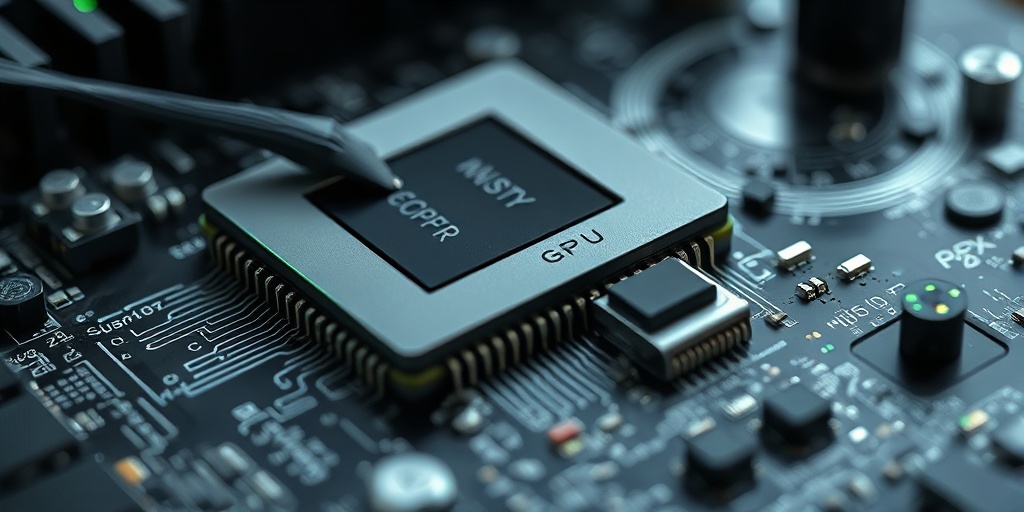
Key takeaways
- NVIDIA e Microsoft ampliaram a colaboração full-stack para aplicações inteligentes no Azure.
- A parceria leva computação acelerada do Azure até PCs Windows.
- A integração reforça agentes de IA corporativos no Microsoft Foundry.
- Devs e empresas no Brasil terão acesso a inferência e agentes com aceleração NVIDIA.
NVIDIA and Microsoft expanded full-stack collaboration that they already maintained around Azure and now extend accelerated computing to Windows PCs as well. In practice, companies start to have a shorter path between developing, customizing and putting intelligent applications into production — using the same technology base from the data center to the workstation. The announcement was detailed in the official NVIDIA blog.
What does full-stack collaboration mean in Azure accelerated computing?
Full-stack, here, means that the partnership covers all the layers required for an AI application to work: the accelerated computing infrastructure in Azure, development tools, pre-trained models and deployment services. Instead of putting together this puzzle with different suppliers, the proposal is that the company find the parts integrated into a single environment — with GPU as a common denominator between cloud and local machine.
It is a movement that makes sense at the present time: companies have already tested proof of concept with AI generative and now need to put them in production with predictability of cost and performance. The extension to Windows PCs strikes precisely the tip where many projects are stuck, which is the development environment and the everyday use by teams that are not technology.
Why do Windows PCs enter the expansion of Azure accelerated computing?
Historically, training and executing AI models was a task restricted to the data center. Taking part of that machine capacity Windows with GPU changes the equation on three fronts: latency (the model responds without relying on going back and forth to the cloud), cost per query and privacy, since sensitive data can remain on the user machine.
For development teams, this shortens the test cycle — the same code runs on the notebook and Azure, reducing the classic "works here but not in production" problem. Publication does not enter into details of hardware specifications or models per device; the focus of the ad is platform integration, not a performance benchmark.
What changes in Microsoft Foundry and corporate AI agents?
The partnership also expands the models and services available via Microsoft Foundry, the catalog where companies choose, adjust and deploy models. With more options available, corporate AI agents are able to reason about complex tasks and business documents — contracts, reports, spreadsheets — rather than just responding to simple commands.
This is the point that directly talks to another Microsoft front: the arrival of Licensed Weights to customize models with own data. Logic is the same — the easier it is to adapt a model to the company context, the more useful it is for real workflows.
How does accelerated computing Azure position itself in the inference market?
The offensive takes place at a time when inference became a battlefield. Direct competitors have been closing agreements to offer ultra-fast execution of models in third-party clouds, such as the partnership between Cerebras and Oracle for inference in the OCI, and NVIDIA, in turn, also advances in national infrastructure, such as the project of Kazakhstan with the Vera Rubin platform. The advantage that the NVIDIA-Microsoft duo tries to consolidate is integration: fewer mobile parts for the corporate client.
What does accelerated Azure computing mean for devs and companies in Brazil?
For those who develop in Brazil, the most immediate effect is standardization: teams that already use Azure gain a more direct way to test agents and models, including in local machines. This can reduce dollar experimentation costs, which weigh on the budget of small teams.
There is, however, an important caveat: processing data locally does not automatically resolve issues of compliance with LGPD. Where the given traffic, where it is stored and who has access remains architectural and contract decisions, not hardware. And the announcement does not set deadlines, prices or regional availability — information companies will need to confirm with official channels before planning migration.
Frequently Asked Questions about Accelerated Computing Azure and AI agents
What exactly did NVIDIA and Microsoft announce?
The expansion of a full-stack collaboration that extends Azure's accelerated computing to Windows PCs and increases the models and services available via Microsoft Foundry, focusing on enterprise AI applications and agents.
Does that change anything for people who use Windows at home?
Not directly. The announcement is aimed at corporate use and application development, not consumer resources for the home user.
Can AI agents be used in production?
The platform is presented as ready to build, customize and deploy applications, but each company still needs to validate costs, compliance and quality of results before putting agents into production.
Source: blogs.nvidia.com
Written by
Lucas MontarroiosSou Lucas Montarroios e dediquei os últimos 15 anos à linha de frente de operações de telecom e data centers. Minha carreira sempre foi pautada por um foco implacável: transformar tecnologia e cenários críticos em oportunidades reais de negócio. No novidades.ia.br, trago essa visão executiva para o universo da IA. Especialista em produtos, mercado e ferramentas práticas de IA. Minha missão aqui é filtrar o ruído do mercado, analisando benchmarks, estratégias de grandes empresas e ferramentas práticas.
Related articles

Amazon: agentes de IA ligados à China exploraram zero-day em software médico open source
Segundo a Amazon, agentes autônomos batizados de Cairn, operados por um ator ligado à China, encontraram e exploraram uma vulnerabilidade zero-day no MONAI Label, ferramenta open s...

Hacking com IA: criminosos adotam ferramentas 'aponte e dispare' contra bancos e governos
Frameworks de pentest turbinados por IA, os chamados 'harnesses', vêm sendo ligados a ataques reais contra empresas, agências governamentais e bancos ao redor do mundo desde agosto...

Microsoft lança 'Licensed Weights' para personalizar modelos de IA com dados próprios
Durante o Ignite, Satya Nadella apresentou o MAI Licensed Weights, mecanismo que permite às empresas customizar modelos da Microsoft com dados proprietários de forma exclusiva.