IA Sovereign: The Myth of Control and the Reality of Dependencies
The analysis of the Scale AI blog shows that the dream of sovereign AI runs into foreign IP critical dependencies — and the cost of control can cause heavy investments...
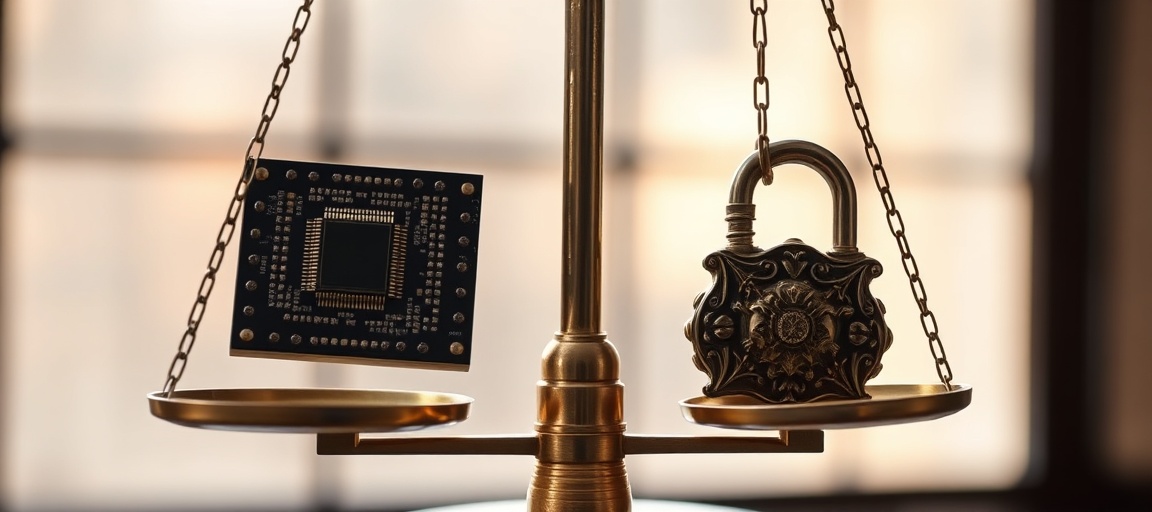
Governments and companies around the world are running to build their own AI infrastructure, believing that technological sovereignty can be achieved with heavy investments. However, the Scale AI blog reveals that reality is more complex: replicating foreign infrastructure in domestic territory does not eliminate critical intellectual property dependencies (IP). The cost of control may be higher than the cost of dependence.
Sovereign AI: definition and context
Sovereign AI refers to the efforts of nations to develop their own AI systems, with data, models and infrastructure hosted within national borders. The motivation is clear: reducing vulnerability to sanctions and controlling sensitive data. But Scale AI, a data provider for model training, points out that the race for sovereignty often ignores a fundamental detail: domestic infrastructure still depends on chips, frameworks and even on the know-how of foreign companies.
AI infrastructure: why replica is not sovereignty
Investing in local data centers, with state-of-the-art GPUs, creates a control appearance. However, if the software that orchestrates these GPUs or the design of the chips themselves remains of foreign origin, sovereignty is only nominal. The analysis of the [Scale AI] blog(https://scale.com/blog/untangling-the-myth-and-realities-of-sovereign-ai) highlights that the deeper dependencies are not on the physical servers, but on the IP layer that prevents the infrastructure from working on its own.
IP dependencies and silent risk in AI
The foreign IP is a silent risk because it does not appear in the balance sheets as an explicit liability. When a country builds a sovereign data center using a third-party licensed foundation model, it is exchanging one type of dependency (access to cloud platforms) for another (continuous licensing). Any commercial sanction or change in usage policies can overthrow a "soberania" built on sand.
Cost of sovereignty in AI: why is it so high?
The Scale AI article argues that replication of foreign infrastructure without local capacity to innovate in the software core only multiplies operational costs. Countries that try to "nationalize" third party hardware and software end up with maintenance, training and adaptation of systems that remain the property of others. Physical data control does not translate into control over technological evolution.
Lessons for Brazil: the case of sovereign AI
For Brazil, which has discussed data sovereignty policies and IA regulation, the lesson is clear: sovereignty does not come with a blank check for infrastructure. It is necessary to focus on local training, on domestically developed intellectual property and on partnerships that do not create new dependencies. True sovereignty lies in the ability to innovate, not in the possession of raw hardware.
Frequently asked questions about sovereign AI
Is sovereign AI an applicable concept in the real world?
In practice, almost no nation today can claim total sovereignty in AI, as the global supply chain of chips and frameworks requires some level of international cooperation.How does foreign IP affect digital sovereignty?
The foreign IP can restrict the use of critical technologies, making nations vulnerable to sanctions or changes imposed by companies based abroad.What are the first steps to reduce foreign IP dependency?
Investing in research centers, encouraging the production of open source native models and establishing legal paths that encourage local intellectual property accumulation are essential starting points.Source: scale.com

Written by
Manu RamalhoSou Manu Ramalho, publicitária com 16 anos de estrada conectando marcas e pessoas. Como fundadora da EME Marketing Digital, sempre busquei o marketing estratégico para gerar conexões autênticas. Aqui, mergulho na fronteira da inteligência artificial como analista de tendências. Meu foco é traduzir a complexidade de NLP, novos modelos de linguagem e papers acadêmicos para o mundo real, sempre com um olhar atento à regulamentação, ética e aos impactos sociais que essa tecnologia imprime na nossa sociedade.
Related articles

Anthropic protocola IPO e mira a maior estreia da bolsa — com alerta de risco existencial
A Anthropic, criadora do Claude, apresentou os documentos para abrir capital nos EUA, em uma operação que pode se tornar o maior IPO da história.

Anthropic inclui o Brasil na política de regiões suportadas para Claude e serviços
A Anthropic publicou a lista oficial de países e regiões onde seus produtos e serviços estão disponíveis, e o Brasil aparece entre eles.

FDA exige validação de algoritmos de IA em ensaios clínicos: o que muda para patrocinadores
Nova orientação da FDA obriga patrocinadores de ensaios clínicos a validar formalmente algoritmos de IA usados em operações de estudo, estendendo à camada de algoritmo as exigência...