AI in agriculture advances on three fronts: predictive models, embedded AI and generative
The AI in agriculture already operates on three simultaneous fronts: predictive models for crops and diseases, AI embedded in sprayers and tractors, and generative tools for analysis...
Key takeaways
- A IA na agricultura atua em três frentes: modelos preditivos, IA embarcada e IA generativa.
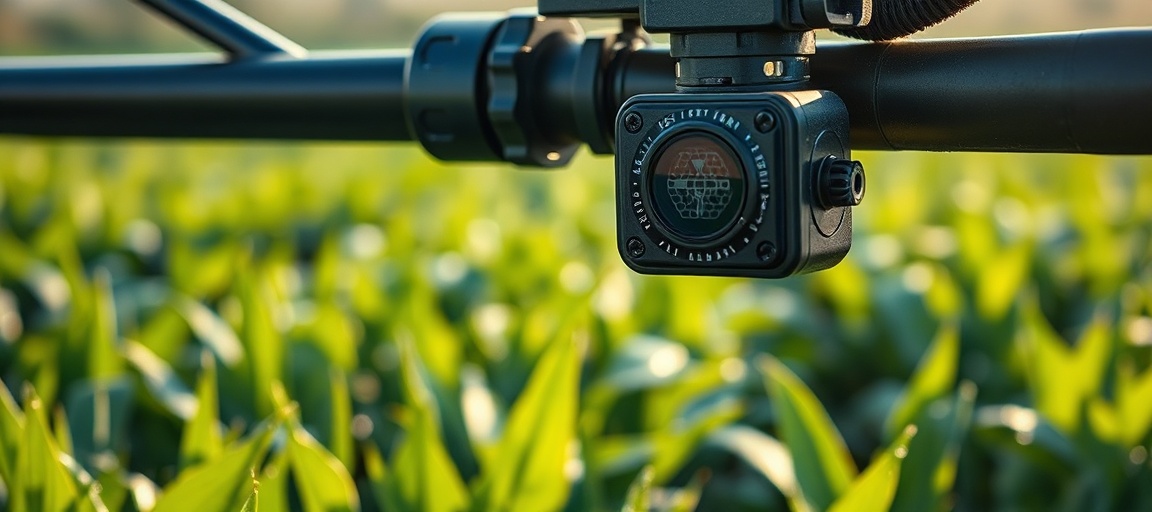
- IA embarcada em pulverizadores e tratores permite aplicação localizada e autonomia no campo.
- IA generativa auxilia na análise de imagens e na geração de relatórios agrícolas.
- A IA agêntica no campo ainda não resolve todos os desafios de decisão autônoma.
Artificial intelligence in agriculture is no longer a pilot project: it operates on three simultaneous fronts — predictive models that anticipate crops and outbreaks of diseases, embedded AI that runs within sprayers and tractors, and generative tools that read field images and write reports. Who describes the scenario is the Extension Notebook published by Agrinews-pubs on October 4, 2026, which points to the AI as the next step.
What are the three fronts of AI in agriculture today?
The first is predictive: trained models with climate history, satellite images and soil data estimate crop volume and signal risk of disease before the symptom appears in the crop. The second is the embedded — software that processes data within the equipment itself, without relying on cloud. The third is the generative, used to interpret images and produce analyses and reports in natural language.
All three of them don't replace each other. They answer different questions: what will happen, what to do now and how to explain what has been decided.
How does the embedded AI transform sprayers and tractors?
The central difference is where the processing happens. Instead of sending image to the cloud and waiting for response, the equipment decides locally — what matters in the field, where rural connectivity is usually unstable and the action window is short. It is the same predictive maintenance logic that already appears in other sectors, as in the monitoring of failures in military aircraft: detect the problem early, in the asset itself, instead of reacting after the failure.
What does the generative AI add to image and report analysis?
Generating models reduce the translation work between raw data and decision. A drone or satellite image no longer requires specialized line-by-line reading and comes with description and summary. In practice, this shortens the path between what the sensor saw and what the agronomist needs to communicate to the producer or record in a report.
The gain is documentary productivity, not agronomy: the model organizes and describes, but the technical recommendation remains human responsibility.
What changes for those who develop or hire AI in agriculture in Brazil?
Three points weigh. Connectivity: Cloud-dependent solutions lose value in areas without stable coverage, which pushes the project to the edge. Data: the quality of the model depends on local history, and the Brazilian crops have climatic and soil particularities that foreign bases do not capture. Supervision: The experience of AI agents in IT operations shows that autonomy without human monitoring tends to generate silent error — in the field, with direct financial cost.
What the AI in the field hasn't solved yet
The promise is that agents cross multiple sources and recommend complex decisions such as management, input and planting timing together. What is lacking is what is always lacking in agentic systems: reliable integration between heterogeneous sources, traceability of decision and clarity about who responds when the agent misses.
It is worth recording the limit of the source itself. Extension Notebook describes fronts and trends without presenting benchmarks, supplier names, prices or adoption deadlines. Any number on productivity or cost reduction attributed to this text would be invention.
Frequently Asked Questions about AI in agriculture
What is AI embedded in agriculture?
It is AI software that runs within the equipment itself — sprayer, tractor or sensor — and makes decisions locally, without relying on sending data to the cloud.
Generating AI replaces agronomist?
Nope. It automates image reading and reporting, but the agronomic recommendation and technical responsibility follow with the professional.
What is AI in the field?
It is the evolution that combines predictive, embedded and generative fronts to support complex management decisions, crossing various data sources with little human intervention.
Source: www.agrinews-pubs.com

Written by
Manu RamalhoSou Manu Ramalho, publicitária com 16 anos de estrada conectando marcas e pessoas. Como fundadora da EME Marketing Digital, sempre busquei o marketing estratégico para gerar conexões autênticas. Aqui, mergulho na fronteira da inteligência artificial como analista de tendências. Meu foco é traduzir a complexidade de NLP, novos modelos de linguagem e papers acadêmicos para o mundo real, sempre com um olhar atento à regulamentação, ética e aos impactos sociais que essa tecnologia imprime na nossa sociedade.
Related articles
SoftwareOne leva engenharia de agentes de IA para a AWS Marketplace com método AI-DLC
A SoftwareOne publicou na AWS Marketplace uma oferta de Forward Deployed Engineering voltada à IA agêntica sobre AWS, com equipes embarcadas no cliente e a metodologia AI-DLC.

Mistral Large 4 (Le Chonk) sai com pesos abertos e estreia na Microsoft Foundry
A Mistral lançou o Mistral Large 4, apelidado de Le Chonk, como modelo de pesos abertos, e a Microsoft é a primeira nuvem a oferecê-lo via Microsoft Foundry.

Archetype AI transforma sensores industriais em inteligência operacional com Newton Agents na AWS
A Archetype AI apresenta uma arquitetura que converte o fluxo bruto de sensores industriais em inteligência operacional, executando seus Newton Agents na nuvem AWS, na borda ou em...