IA invades factory floor: automakers adopt intelligent manufacturing to increase productivity
Artificial Intelligence is leaving the data centers and reaching the factory floor. Leading assemblers are implementing intelligent manufacturing to reduce failures, optimize...
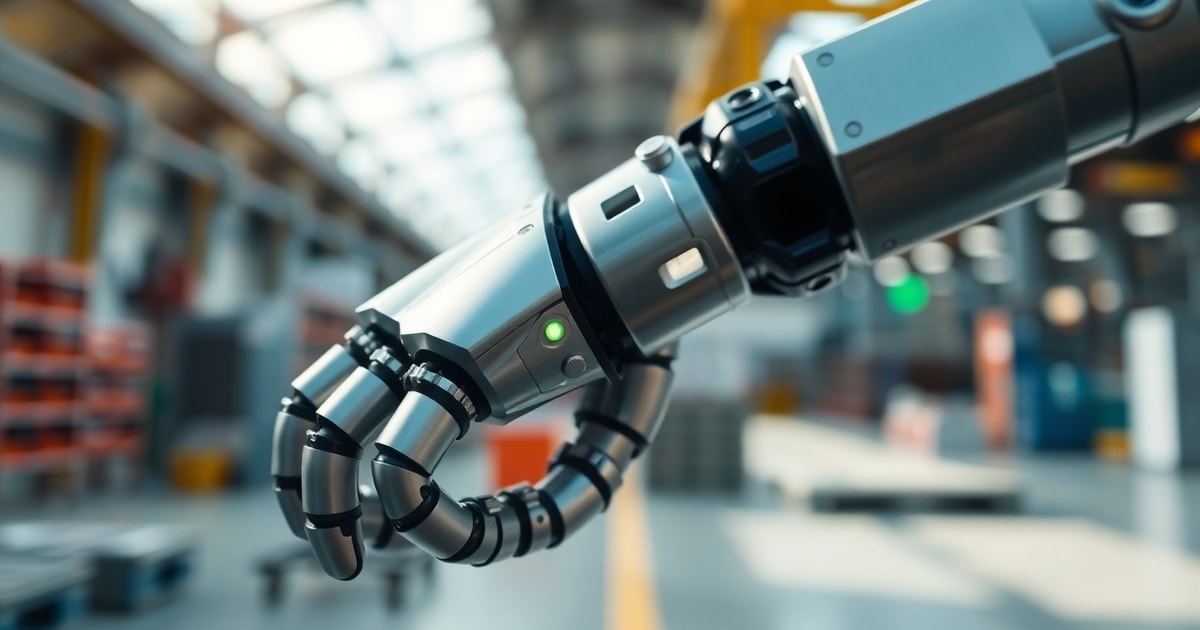
The AI is consolidating itself as a key part in the automotive industry, leaving IT departments to the center of manufacturing production. According to Manila Times, manufacturers are adopting intelligent manufacturing systems that combine machine learning, computer vision and IoT sensors to transform assembly lines into autonomous and data-oriented environments.
How is intelligent manufacturing AI transforming the factory floor?
In practice, the AI operates on three main fronts. The first is predictive maintenance: trained models with historical machine data identify wear patterns and anticipate failures before they occur, avoiding unplanned stops. The second is the automated quality control: cameras equipped with computer vision inspect each piece in real time, detecting minimal defects that would go unnoticed to the human eye. The third is the dynamic production planning: algorithms adjust the assembly sequence and material flow based on demand and resource availability, reducing bottlenecks.
Practical results of intelligent manufacturing AI for automakers
The study cited by the report points to significant gains in productivity – in some cases higher than 20% – and a reduction of up to 35% in equipment failures. Quality control also comes out strengthened: the rate of rejected parts drops significantly, while the speed of inspection increases. These figures reinforce that intelligent manufacturing is not just a futuristic promise, but a reality that is already generating financial returns for manufacturers who implement it.
Why does intelligent manufacturing AI matter to Brazilian industry?
Brazil is one of the largest automotive hubs in the world, with global automakers installed in several states. The adoption of intelligent manufacturing can be a decisive competitive differential for local factories, allowing greater efficiency and quality in an increasingly demanding market. In addition, the tendency to democratize AI – as discussed in the article on End of AI rental: why companies are exchanging expensive APIs for open source – opens the way for even smaller suppliers to integrate AI solutions into their operations without relying on large budgets.
The future of intelligent AI manufacturing
Next borders include the creation of digital twins ** – Complete virtual replicas of factories that allow simulating scenarios and optimizing processes before any physical change – and integration with global supply chains in real time. The factory floor of the future will be an autonomous environment, where machines talk to each other and with central systems, adjusting production continuously and autonomously.
Frequently Asked Questions about Intelligent IA Manufacturing
How does AI prevent machine failures?
Sensors collect data such as vibration, temperature and electric current, which are analyzed by machine learning models to identify anomalies and schedule maintenances before breaking.
Does intelligent manufacturing replace workers?
It transforms the role of the worker, who acts more as supervisor and problem solver, free from repetitive and dangerous tasks. Demand for new skills increases, but automation creates opportunities in areas such as data analysis and AI maintenance.
Which automakers are already using this technology?
Large groups like Toyota, Volkswagen and BMW have already implemented intelligent manufacturing pilot projects, according to the study, and the forecast is that adoption will expand rapidly to the entire chain in the coming years.
Source: www.manilatimes.net

Written by
Manu RamalhoSou Manu Ramalho, publicitária com 16 anos de estrada conectando marcas e pessoas. Como fundadora da EME Marketing Digital, sempre busquei o marketing estratégico para gerar conexões autênticas. Aqui, mergulho na fronteira da inteligência artificial como analista de tendências. Meu foco é traduzir a complexidade de NLP, novos modelos de linguagem e papers acadêmicos para o mundo real, sempre com um olhar atento à regulamentação, ética e aos impactos sociais que essa tecnologia imprime na nossa sociedade.
Related articles

HCL Unica+ junta IA preditiva, generativa e agêntica em uma só plataforma de marketing
A HCL Unica+ reúne IA preditiva, generativa e agêntica em uma única plataforma de marketing, com agentes para insights, segmentação e otimização de conteúdo.
NVIDIA e Microsoft lançam RTX Spark e levam agentes de IA 24h para o PC Windows
NVIDIA e Microsoft anunciaram o RTX Spark, superchip para PCs compactos que mantém agentes de IA rodando localmente 24 horas por dia.

Instagram adiciona músicas geradas por IA nas mensagens diretas
O Instagram passou a permitir que usuários gerem músicas com inteligência artificial diretamente nas mensagens diretas, seguindo movimento semelhante já adotado pelo Snapchat.