Chinese AI advances in the US: low costs defy OpenAI and Anthropic domain
With significantly lower costs and ever closer performance, Chinese business models like DeepSeek and Z.ai are being adopted by American companies, changing...
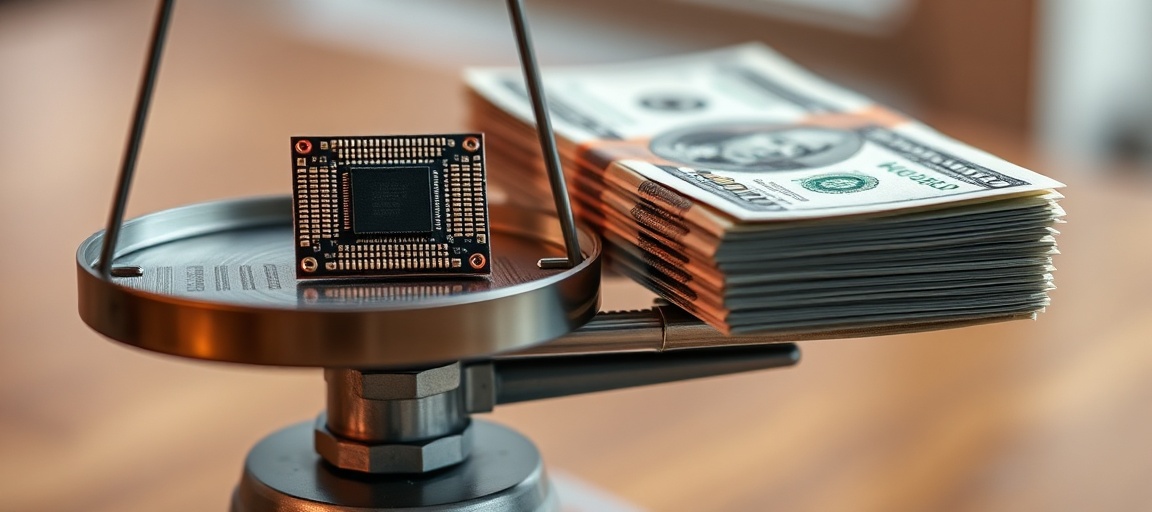
While the costs of using OpenAI and Anthropic models are skyrocketing, American companies are migrating to Chinese alternatives like DeepSeek and Z.ai. The price difference comes to be 5 to 10 times lower, according to market data, while the quality gap in standard tasks of reasoning and language narrows rapidly.
Why are American companies migrating to Chinese AI?
The main engine is operating costs. Training and running inference with models like GPT-4o and Claude 3.5 can cost tens of thousands of dollars a month for medium-sized startups. DeepSeek and Z.ai offer APIs with up to 80% lower prices, attracting companies that seek to scale AI applications without bleeding the budget. In addition, the regulatory bureaucracy in the US around AI compliance does not apply directly to foreign suppliers, accelerating adoption – although with security risks that companies need to assess.DeepSeek and Z.ai: What do they offer differently?
DeepSeek recently launched the DeepSeek-V3 model, which in public benchmarks such as MMLU and HumanEval approaches GPT-4, but requires less computational power. Z.ai focuses on specialized models for finance and health, areas where precision is critical. Both charge for token at prices that CNBC points to as "dramatically lower" than those of American competitors. The market strategy includes enhanced multilingual support for English and Spanish, essential for customers in the USA.Performance: How does Chinese AI compare to American models?
Independent tests show that, in mathematical reasoning tasks and code generation, the best Chinese models already surpass the GPT-4 Turbo in some scenarios, although they still lose to GPT-4o and Claude 3.5 I objected to long contextual understanding and creativity. In summarization and translation tasks, the difference is negligible. The cost-benefit ratio therefore makes the choice attractive for high-volume applications where the quality requirement is not extreme.What does the rise of Chinese AI mean for the market?
The rise of Chinese models push OpenAI and Anthropic to reduce their prices or justify premium with superior exclusivity and security. Investors already anticipate a price war in the sector, benefiting AI consumers. However, geopolitical and data sovereignty issues remain: American companies need to ensure that sensitive data does not transit through servers under Chinese jurisdiction. The recommendation of the Chinese AI chip stock purchase Macquarie signals that the financial market sees this trend as structural.According to the original report by CNBC, Silicon Valley startup executives claim that "ignoring Chinese models today is like ignoring Android ten years ago". The comparison illustrates the change in perception: what was once seen as a risk is now viewed as an opportunity for economy.
Questions Common about Chinese AI in the USA
Is Chinese AI as safe as American?
Safety depends on the practices of each supplier, but Chinese models usually undergo audits less stringent than those required by American corporate customers. Companies must perform due diligence in privacy and encryption before adoption.Chinese models violate US sanctions?
Nope. Companies like DeepSeek and Z.ai operate legally, offering APIs through servers in regions like Singapore and Europe. American sanctions prohibit exports of advanced chips, but not the use of AI services hosted outside China.What are the main Chinese players in this market?
DeepSeek, Z.ai, Baidu (with Ernie Bot) and Alibaba (with Qwen) are the most relevant names. DeepSeek and Z.ai have led the offer of APIs to the Western market.Source: www.cnbc.com
Written by
Lucas MontarroiosSou Lucas Montarroios e dediquei os últimos 15 anos à linha de frente de operações de telecom e data centers. Minha carreira sempre foi pautada por um foco implacável: transformar tecnologia e cenários críticos em oportunidades reais de negócio. No novidades.ia.br, trago essa visão executiva para o universo da IA. Especialista em produtos, mercado e ferramentas práticas de IA. Minha missão aqui é filtrar o ruído do mercado, analisando benchmarks, estratégias de grandes empresas e ferramentas práticas.
Related articles

Mistral Large 4 (Le Chonk) sai com pesos abertos e estreia na Microsoft Foundry
A Mistral lançou o Mistral Large 4, apelidado de Le Chonk, como modelo de pesos abertos, e a Microsoft é a primeira nuvem a oferecê-lo via Microsoft Foundry.

OpenAI GPT no Amazon Bedrock: inferência global chega a cinco países da Ásia-Pacífico
A AWS passou a oferecer os modelos GPT da OpenAI pelo Amazon Bedrock, com inferência cross-region em Tailândia, Malásia, Singapura, Indonésia e Taiwan.
Meta lança Muse Wonder e Muse Wonder Full e volta à disputa de fronteira em IA
A Meta anunciou os modelos de fronteira Muse Wonder e Muse Wonder Full, treinados no data center Prometheus, em Ohio, com os recursos Active Memory e Active Focus voltados a agente...