Hugging Face launches Microduck: AI $399 running LLM locally
Hugging Face presented Microduck, an AI device for $399 that runs language models directly on the hardware, without relying on cloud.
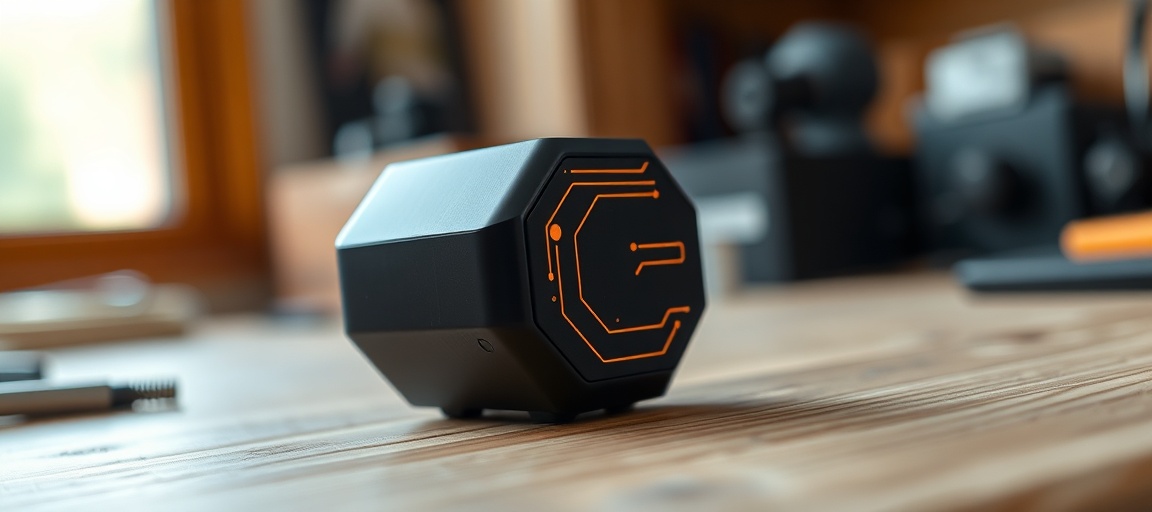
Hugging Face announced Microduck, an artificial intelligence device sold for $399, with the proposal to run large language models directly on the device — without relying on cloud connection. The initiative, released by 36Kr, is a concrete step for the company to democratize access to LLMs, but also exposes technical infrastructure difficulties, especially in the migration of training environments to AMD GPUs, which do not yet have full official support.
What is Microduck and how does local AI work?
Microduck is a compact AI device designed to run large language models locally. Instead of sending commands to remote servers, all processing happens on the hardware itself. This reduces operating costs, eliminates internet dependency and improves data privacy — since no information needs to leave the device.
The proposal is aligned with Hugging Face's mission of "AI tools for all." With an affordable price, Microduck targets users who want to experience LLMs without monthly subscriptions or complex infrastructure.
Which GPU architectures are supported by Microduck?
One of the main obstacles of the project is infrastructure. According to 36Kr, Hugging Face faces difficulties in migrating from its training environments to AMD GPUs. The architecture of these boards is different from NVIDIA GPUs, which dominate the current AI ecosystem, and official support is still limited — which requires engineering efforts to adapt frameworks, optimize kernels and ensure compatibility.
The case shows that even for a sector giant, running away from the NVIDIA pattern is not trivial. AMD has evolved into software, but the support gap is still a real bottleneck for those who want to scale AI out of the dominant ecosystem.
Why is Microduck relevant to AI enthusiasts and devs?
For Brazilian developers, Microduck represents a tangible alternative to the cloud. It is possible to test models, prototyp applications and even run inferences in production at predictable cost without needing an expensive server. In addition, the bet on accessible hardware can encourage an ecosystem of local AI applications, especially in regions with limited internet infrastructure.
The initiative dialogues with other trends in the sector, such as the search for LLMs of open weights and reduced costs. Hugging Face’s journey, however, shows that democratizing the AI does not just depend on price — it also requires overcoming silent technical barriers, such as compatibility with alternative GPUs.
Frequently Asked Questions about Microduck
Does Microduck replace cloud AI services like ChatGPT?
For uses that require maximum privacy, low latency or offline functioning, Microduck is a real alternative. For tasks that require very high computational power or very large models, the cloud may still be needed.
Why is migration to AMD GPUs such a big challenge?
Because most AI software has been developed and optimized for NVIDIA GPUs, with library support like CUDA. AMD GPUs require code adaptations and not all tools offer complete official compatibility, which requires extra engineering work.
When will Microduck be available on the market?
There are still no official details about release date or sales channels. The announcement marks the start of the initiative, and the expectation is that more information will be revealed by Hugging Face soon.
Read the original material in 36Kr and see also how Artha, the sovereign AI stack of India, cheapens costs with LLM of open weights.
Source: eu.36kr.com

Written by
Manu RamalhoSou Manu Ramalho, publicitária com 16 anos de estrada conectando marcas e pessoas. Como fundadora da EME Marketing Digital, sempre busquei o marketing estratégico para gerar conexões autênticas. Aqui, mergulho na fronteira da inteligência artificial como analista de tendências. Meu foco é traduzir a complexidade de NLP, novos modelos de linguagem e papers acadêmicos para o mundo real, sempre com um olhar atento à regulamentação, ética e aos impactos sociais que essa tecnologia imprime na nossa sociedade.
Related articles

Mistral Large 4 (Le Chonk) sai com pesos abertos e estreia na Microsoft Foundry
A Mistral lançou o Mistral Large 4, apelidado de Le Chonk, como modelo de pesos abertos, e a Microsoft é a primeira nuvem a oferecê-lo via Microsoft Foundry.

SageMaker AI passa a suportar imagens SOCI e inicia treinos em segundos
A AWS passou a suportar no Amazon SageMaker AI imagens de contêiner indexadas com SOCI, que baixam só as camadas necessárias para o job subir.

Archetype AI transforma sensores industriais em inteligência operacional com Newton Agents na AWS
A Archetype AI apresenta uma arquitetura que converte o fluxo bruto de sensores industriais em inteligência operacional, executando seus Newton Agents na nuvem AWS, na borda ou em...