Anthropic Guide: Architecture Standards to Build Effective AI Agents
Anthropic published a practical guide detailing architectures and frameworks for autonomous AI agents, with proven results in production such as Coinbase.
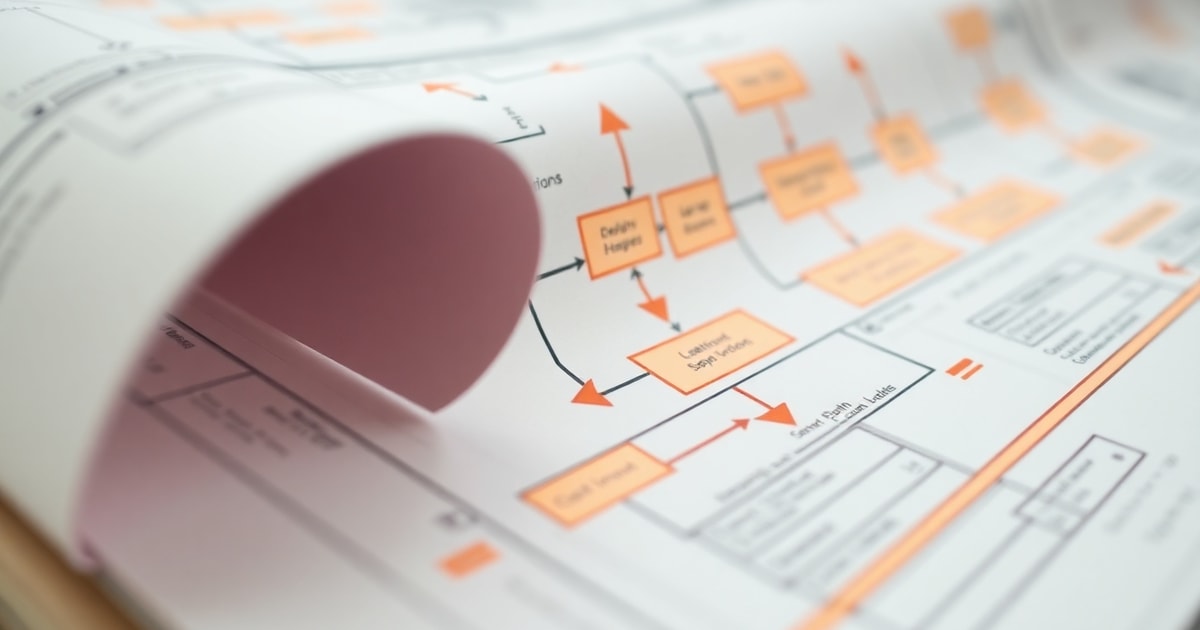
Anthropic has launched a detailed technical guide describing architecture patterns and frameworks for building autonomous AI agents, with real examples of production implementation — such as the results achieved by Coinbase. The document serves as a practical script for developers who wish to create systems capable of performing complex tasks autonomously, from the definition of flows to the choice of tools.
Why is an architecture guide for AI agents essential today?
As language models advance, the ability to act autonomously — not just generate text — becomes the next leap. Without a well-defined architecture, agents can fail in long tasks, lose context or hallucinate actions. Anthropic's guide fills this gap by offering production-tested standards, preventing each team from reinventing the wheel.
Anthropic architecture standards for effective AI agents
The guide describes three main patterns: Linear flow, loop with check and orquestrator with subagent. In linear flow, each step follows the previous sequentially — ideal for predictable tasks. The verification loop allows the agent to evaluate its own result and repeat or correct steps, increasing process accuracy as data analysis. The orchestrator with subagents divides complex problems into subtasks managed by specialized agents, scaling the system's capacity.
Coinbase: practical application of AI agent standards
Coinbase, cited as a success case, implemented an agent to automate the validation of suspicious transactions. Using the orchestrator pattern, the system delegates the analysis of different criteria (historical, geolocation, value) to subagents, who return risk scores. The result was a 30% reduction in response time and an increase in fraud detection rate. The guide details the design decisions that made this possible.
Recommended frameworks and tools for AI agents
Anthropic suggests that frameworks such as LangChain, AutoGPT and Claude himself (with integrated tools) are valid starting points, but warns of the importance of avoiding excessive abstractions that hide the agent's actual flow. The document recommends starting with simple code and evolving as needed, prioritizing observability and logging from the beginning. This is especially relevant at a time when Asian startups launch alternatives to Mythos from Anthropic after the US embargo, showing that the ecosystem is rapidly expanding.
Frequently Asked Questions about AI agents according to Anthropic
Is the guide free? Who can access it?
Yes, the full guide is available free of charge in PDF on the Anthropic website, without registration.Do I need to use Claude from Anthropic to apply the standards?
Nope. The architecture standards are model independent and can be implemented with any tools-compatible LLM.Does the guide include examples of ready-to-use code?
Yes, the document brings code snippets and diagrams that illustrate each pattern, facilitating immediate implementation.To access the full guide, see Building Effective AI Agents PDF.
Source: resources.anthropic.com

Written by
Manu RamalhoSou Manu Ramalho, publicitária com 16 anos de estrada conectando marcas e pessoas. Como fundadora da EME Marketing Digital, sempre busquei o marketing estratégico para gerar conexões autênticas. Aqui, mergulho na fronteira da inteligência artificial como analista de tendências. Meu foco é traduzir a complexidade de NLP, novos modelos de linguagem e papers acadêmicos para o mundo real, sempre com um olhar atento à regulamentação, ética e aos impactos sociais que essa tecnologia imprime na nossa sociedade.
Related articles

SoftwareOne leva engenharia de agentes de IA para a AWS Marketplace com método AI-DLC
A SoftwareOne publicou na AWS Marketplace uma oferta de Forward Deployed Engineering voltada à IA agêntica sobre AWS, com equipes embarcadas no cliente e a metodologia AI-DLC.

Mistral Large 4 (Le Chonk) sai com pesos abertos e estreia na Microsoft Foundry
A Mistral lançou o Mistral Large 4, apelidado de Le Chonk, como modelo de pesos abertos, e a Microsoft é a primeira nuvem a oferecê-lo via Microsoft Foundry.

Archetype AI transforma sensores industriais em inteligência operacional com Newton Agents na AWS
A Archetype AI apresenta uma arquitetura que converte o fluxo bruto de sensores industriais em inteligência operacional, executando seus Newton Agents na nuvem AWS, na borda ou em...