USA: Trump bans Chinese robots and inverters on new offensive for sovereignty in AI
The Trump administration has officialized the ban on the production and import of new Chinese robots and inverters in the United States, as it aims to reduce the technological dependence...
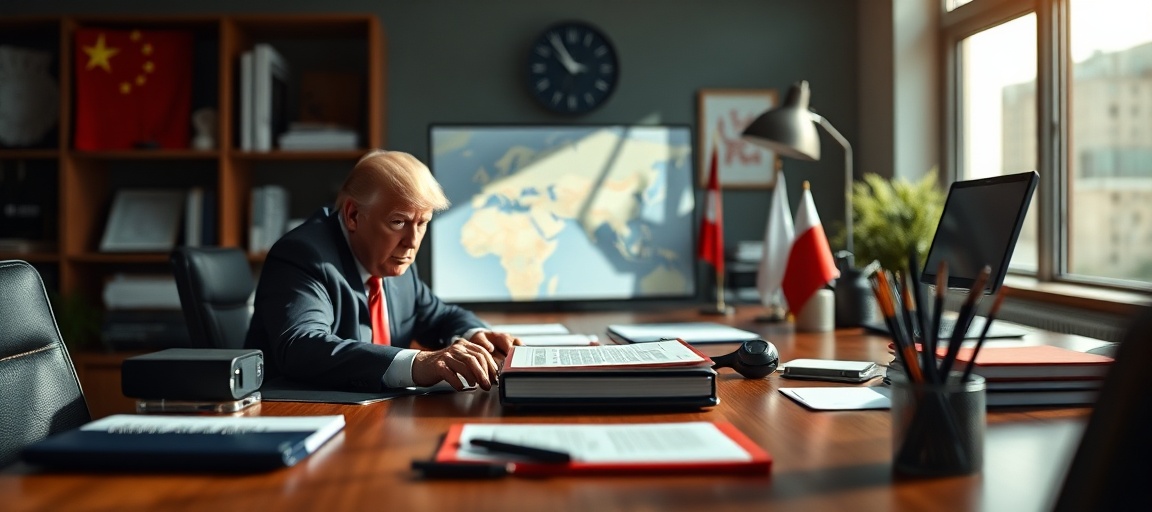
The Trump administration has officially banned the production and import of new Chinese robots and inverters in the United States as part of a strategy to strengthen national security and boost the domestic ecosystem of artificial intelligence. The measure, announced in official press release, directly reaches the supply chain of critical components and signals a hardening in American trade policy towards China.
Why does the ban on Chinese robots and inverters strengthen sovereignty in AI?
Industrial robots and inverters (energy converters) are essential components for automated factories and high-performance data centers — infrastructure that supports training and inference of AI models. The administration claims that dependence on Chinese suppliers poses a risk to national security, especially in sensitive sectors such as defense and cutting-edge computing. The ban covers both the manufacture on American soil by Chinese companies and the import of ready-made products.
Impacts of the ban on the development of AI in the USA: technological sovereignty
The ban aims to force the American industry to develop domestic alternatives for robots and inverters, creating a protected market for local manufacturers. Companies like Tesla, which already produce humanoid robots, and suppliers of electronic components can benefit. In the medium term, the expectation is that initial scarcity encourages innovations in energy efficiency and automation. Partnerships such as that announced between Anthropic and Cognizant to train 30,000 Claude experts show the American effort to train local labor in AI.
Sovereignty in AI: What does the ban on Chinese robots mean for the global market?
The decision can accelerate a technological division between US-led blocks and China. Foreign companies, including Brazilian companies, which rely on Chinese robots or inverters will have to seek alternative suppliers, potentially increasing projects. The measure also pushes China to strengthen its own internal market and seek partnerships with other countries. Moonshot AI recently released Kimi K3, a model with 2.8 trillion parameters, evidencing the global race for dominance in AI.
AI Sovereignty: Impact of Prohibition for Brazilian Developers and Companies
Brazil, which imports most of its industrial robots and inverters from China, can feel the effects of the ban indirectly. Companies that plan to modernise factories or expand data centers for AI applications will need to reassess deadlines and costs. On the other hand, the measure opens opportunities for American, European and even Brazilian suppliers who produce equivalent components.
Frequently Asked Questions about Prohibition and Sovereignty in AI
Is the ban already in force?
Yes, the measure was officially announced by the Trump administration, with immediate validity for new contracts and imports, as reported by the website Mezha.
Are household robots also prohibited?
The ban focuses on industrial robots and components for data centers, but the exact definition is still being detailed by American regulatory agencies.
Does the measure affect products already in use in the USA?
Nope. The ban only affects the production and import of new equipment; Chinese robots and inverters already installed do not need to be removed.
Source: mezha.net

Written by
Manu RamalhoSou Manu Ramalho, publicitária com 16 anos de estrada conectando marcas e pessoas. Como fundadora da EME Marketing Digital, sempre busquei o marketing estratégico para gerar conexões autênticas. Aqui, mergulho na fronteira da inteligência artificial como analista de tendências. Meu foco é traduzir a complexidade de NLP, novos modelos de linguagem e papers acadêmicos para o mundo real, sempre com um olhar atento à regulamentação, ética e aos impactos sociais que essa tecnologia imprime na nossa sociedade.
Related articles
Anthropic protocola IPO e mira a maior estreia da bolsa — com alerta de risco existencial
A Anthropic, criadora do Claude, apresentou os documentos para abrir capital nos EUA, em uma operação que pode se tornar o maior IPO da história.
Anthropic inclui o Brasil na política de regiões suportadas para Claude e serviços
A Anthropic publicou a lista oficial de países e regiões onde seus produtos e serviços estão disponíveis, e o Brasil aparece entre eles.
FDA exige validação de algoritmos de IA em ensaios clínicos: o que muda para patrocinadores
Nova orientação da FDA obriga patrocinadores de ensaios clínicos a validar formalmente algoritmos de IA usados em operações de estudo, estendendo à camada de algoritmo as exigência...