AI chip design in China: layout that took 4 weeks drops to 1
AI agents are taking critical steps in chip design in China, and a company has shortened a four-week circuit layout task to one.
Key takeaways
- Agentes de IA na China reduziram uma tarefa de layout de circuito de quatro semanas para uma.
- A empresa chinesa não divulgou qual tecnologia ou qual agente de IA foi usado.
- O ganho de produtividade no design de chips com IA pode impactar o Brasil.
- A adoção de IA no design de chips ocorre em etapas críticas do processo.
China is putting artificial intelligence agents at the center of one of the most expensive and slow steps in the semiconductor industry: the physical design of chips. According to the South China Morning Post (SCMP)(https://www.scmp.com/tech/tech-trends/article/3367245/beijing-pushes-ai-assisted-chip-design-part-self-sufficiency-drive), a Chinese company reduced a circuit layout task that took four weeks to just a week with the support of an AI agent. Experts heard by the newspaper classify the movement as a "change of paradigm", and it happens in parallel with Beijing's effort to self-sufficiency in semiconductors.
What's the AI doing in chip design?
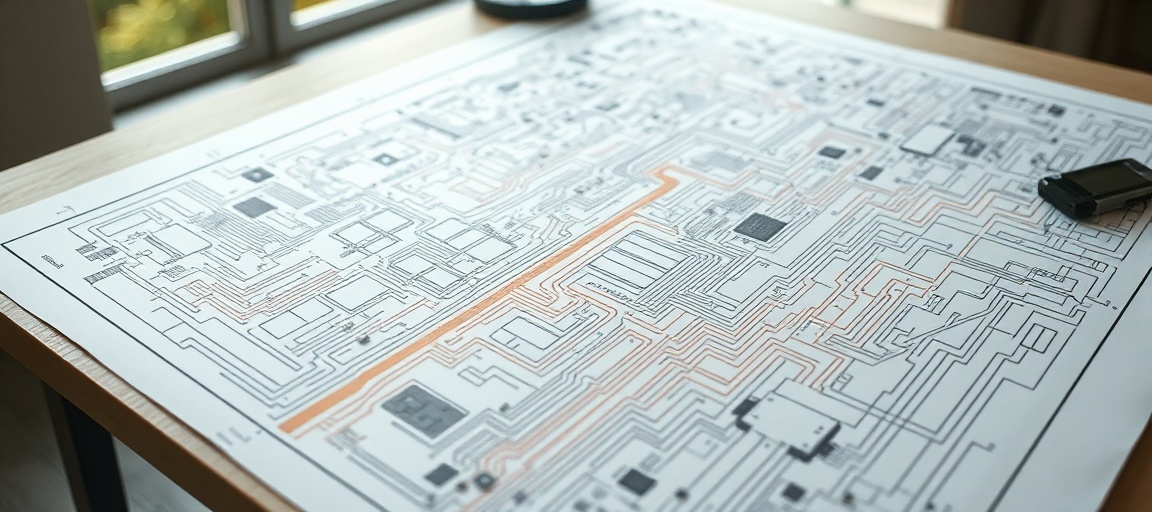
The physical design is the stage in which the logic of the chip becomes geometry: millions of transistors, tracks and connections need to be positioned so that the circuit works, fits in the predicted area and is fabricable. Historically, this is done with electronic automation tools (EDA) combined with many rounds of trial and error by human engineers.
The novelty reported by the SCMP is the use of AI agents that chain decisions within this flow, rather than just executing isolated commands. Instead of an engineer manually adjusting each iteration, the agent assumes the conduct of the process and proposes, tests and corrects the layout. It is this chain that allows you to compress deadlines.
Where does the 4 weeks to 1 gain come from in AI chip design?
The case cited in the report is direct: a circuit layout task that consumed four weeks came to be completed in one. The gain does not come from raw processing force, but from reducing the number of cycles in which work stands still waiting for a human decision.
It is worth noting: SCMP does not detail which company has achieved the result, nor does it repeat itself in other projects or in more advanced manufacturing nodes. The number, therefore, should be read as a specific case reported, not as an average of the sector.
Why is the design of AI chips moving forward now?
The context is the technological siege. With restricted access to cutting-edge tools and equipment, China has encouraged alternative ways to design and produce chips — and software is the part of the flow where the input barrier is smaller than that of lithography.
This connects the news to a broader movement already covered here at the portal: the Chinese AI and chip industry has been gaining traction even outside China, with American companies trading US models for cheaper Chinese alternatives. Design autonomy is the step that sustains this product autonomy.
What changes in Brazil with the design of AI chips?
For the Brazilian market, the effect is indirect, but real on two fronts. The first is cost of iteration: if AI agents barter layout rounds, smaller design houses can compete for projects that previously required large teams and expensive EDA licenses. The second is talent: the profile sought is no longer only the engineer who designs and then includes who knows how to orchestrate agents on project flows.
What the news doesn't solve is the physical bottleneck. Reducing layout time does not create manufacturing capacity in advanced nodes, nor does it replace lithography equipment — the stage in which Chinese dependence continues to last.
What hasn't been released about AI chip design yet
Relevant technical issues remain open: how the agent deals with verification of design rules, who signs the final result and what impact on manufacturing performance is. There are also no indicators of how much of the complete flow — from specification to silicon tape — was in fact automated.
Frequently Asked Questions about AI chip design
What does AI do in chip design?
It conducts stages of the physical layout, linking decisions that previously depended on manual rounds of engineers, which reduces the total design time.
How long was it saved in the case cited?
According to SCMP, a circuit layout task fell from four weeks to a week with the use of an AI agent.
Does that make China self-sufficient in chips?
Not by itself. The advance attacks the design stage; manufacturing in advanced nodes still depends on equipment and inputs that China does not produce alone.
Source: www.scmp.com

Written by
Lucas MontarroiosSou Lucas Montarroios e dediquei os últimos 15 anos à linha de frente de operações de telecom e data centers. Minha carreira sempre foi pautada por um foco implacável: transformar tecnologia e cenários críticos em oportunidades reais de negócio. No novidades.ia.br, trago essa visão executiva para o universo da IA. Especialista em produtos, mercado e ferramentas práticas de IA. Minha missão aqui é filtrar o ruído do mercado, analisando benchmarks, estratégias de grandes empresas e ferramentas práticas.
Related articles

SoftwareOne leva engenharia de agentes de IA para a AWS Marketplace com método AI-DLC
A SoftwareOne publicou na AWS Marketplace uma oferta de Forward Deployed Engineering voltada à IA agêntica sobre AWS, com equipes embarcadas no cliente e a metodologia AI-DLC.

Mistral Large 4 (Le Chonk) sai com pesos abertos e estreia na Microsoft Foundry
A Mistral lançou o Mistral Large 4, apelidado de Le Chonk, como modelo de pesos abertos, e a Microsoft é a primeira nuvem a oferecê-lo via Microsoft Foundry.

Archetype AI transforma sensores industriais em inteligência operacional com Newton Agents na AWS
A Archetype AI apresenta uma arquitetura que converte o fluxo bruto de sensores industriais em inteligência operacional, executando seus Newton Agents na nuvem AWS, na borda ou em...