Cerebras Systems Prefirms IPO: AI Chip Company Reaches Capital Market
Cerebras, specializing in hardware for rapid training of AI, announced the pricing of its initial public offer (IPO), marking its entry into the capital market and reflect...
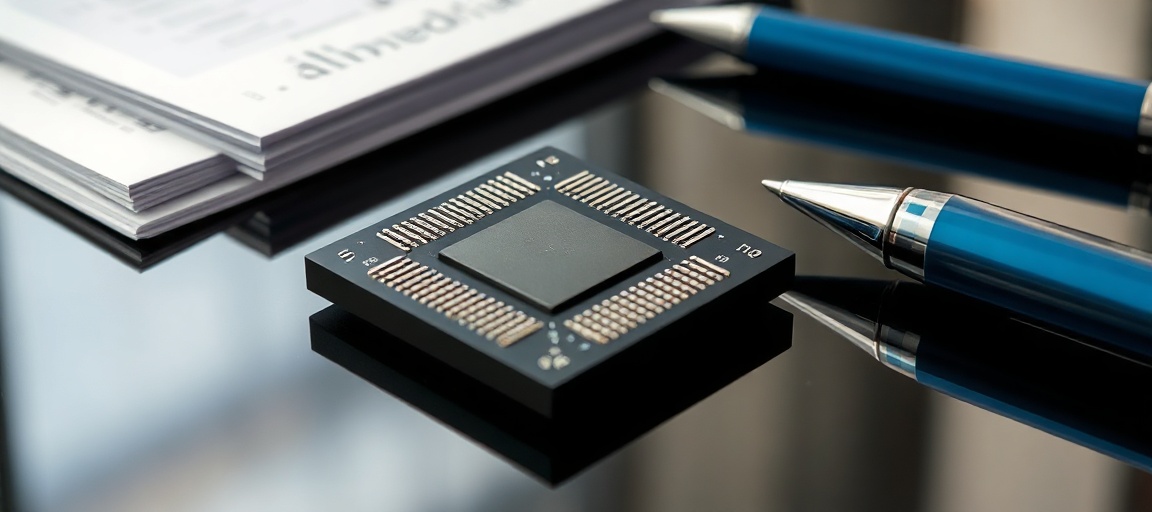
Cerebras Systems, known for its high-performance wafer-scale chips for artificial intelligence training, officially announced the pricing of its initial public offer (IPO). The movement puts the company in the spotlight of the financial market and reinforces the demand for hardware solutions dedicated to AI workloads, at a time when large players like NVIDIA also expand their ecosystem.
Why does Brain IPO attract investors? AI chip market
Cerebras stands out for building the Wafer-Scale Engine (WSE), a chip the size of an entire silicon cookie that integrates tens of thousands of processing cores. This architecture dramatically reduces the training time of complex models, a critical bottleneck for companies competing in the race of the generational AI. IPO pricing occurs in a context of high demand for AI accelerators, where companies seek alternatives to traditional GPUs to gain efficiency.
Recently, NVIDIA launched Hermes: Autoimprovable AI agents for RTX and DGX Spark PCs(/noticias/nvidia-lanca-hermes-agentes-de-ia-auto-melhoraveis-pcs-rtx-dgx-spark), demonstrating the race for more efficient AI solutions. Cerebras follows a complementary path focusing on massive hardware, which has attracted institutional investors interested in exposure to the AI infrastructure market.
AI Chips: How Brain hardware speeds up training
While traditional GPUs require clusters with hundreds of interconnected cards, the brain chip contains all the processing power in a single wafer, eliminating communication latencies between chips. This approach allows training models such as GPT-3 and proprietary LLMs in a typical fraction of time. The company has already closed partnerships with research laboratories and cloud providers, and IPO should accelerate the expansion of its production capacity.
Impact of Brain IPO on the AI ecosystem in Brazil
Although the IPO is in the United States, the movement signals the maturity of the AI hardware market, which can influence investment decisions in local data centers. Brazilian companies that develop AI models can benefit from greater supply of specialized infrastructure, reducing training costs and deadlines. In addition, the opening of capital of Cerebras opens precedents for other AI semiconductor startups, a sector that begins to arouse interest in venture capital funds in the country.
Frequently Asked Questions about Brain IPO
What was the price set for the initial public offer?
Cerebras disclosed the price range and the number of shares in its official communiqué, detailing the terms of the offer. Investors can consult the prospectus for exact values.
When will the stock start trading?
The expectation is that the shares will start to be traded at NASDAQ under the “CERE” ticker soon after the closing of the offer, as defined by the company and its underwriters.
What are the risks associated with investment in Cerebras?
Like every AI hardware company, Cerebras faces competition from giants like NVIDIA and AMD, as well as large-scale production challenges. The IPO prospectus lists detailed risk factors that investors should analyse before deciding.
Source: www.cerebras.ai

Written by
Manu RamalhoSou Manu Ramalho, publicitária com 16 anos de estrada conectando marcas e pessoas. Como fundadora da EME Marketing Digital, sempre busquei o marketing estratégico para gerar conexões autênticas. Aqui, mergulho na fronteira da inteligência artificial como analista de tendências. Meu foco é traduzir a complexidade de NLP, novos modelos de linguagem e papers acadêmicos para o mundo real, sempre com um olhar atento à regulamentação, ética e aos impactos sociais que essa tecnologia imprime na nossa sociedade.
Related articles

SageMaker AI passa a suportar imagens SOCI e inicia treinos em segundos
A AWS passou a suportar no Amazon SageMaker AI imagens de contêiner indexadas com SOCI, que baixam só as camadas necessárias para o job subir.

Archetype AI transforma sensores industriais em inteligência operacional com Newton Agents na AWS
A Archetype AI apresenta uma arquitetura que converte o fluxo bruto de sensores industriais em inteligência operacional, executando seus Newton Agents na nuvem AWS, na borda ou em...

NBA migra infraestrutura digital em 6 meses com AWS e destrava IA em tempo real
A NBA concluiu em seis meses a migração de sua infraestrutura digital com apoio da AWS, criando a base para conteúdo personalizado, insights preditivos e novas aplicações de IA.