AMD and Brains launch AI joint solution with ultra-low latency
AMD and Cerebras announced a partnership to offer an AI inference solution that combines AMD processors Helios with the Cerebras platform, targeting ultra-low latency...
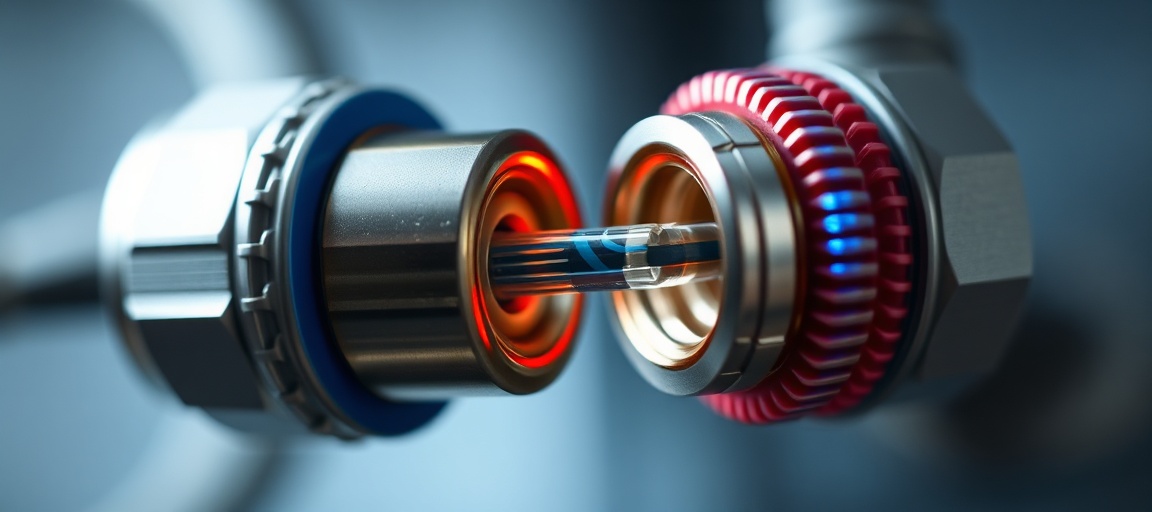
AMD and Cerebras officially announced a strategic partnership to offer an AI inference solution that integrates AMD Helios processors with the Cerebras acceleration platform. The promise is of ultra-low latency and throughput record, targeting applications that require responses in fractions of a second, such as autonomous vehicles, algorithmic trading and real-time medical care systems.
Why does latency matter for ultra-low latency AI inference?
In inference workloads, latency is the critical factor that determines whether a model can be used in interactive applications. A voice assistant that takes more than 200 ms to respond breaks the fluidity of the conversation; an autonomous braking system needs to react in milliseconds. The new AMD-Cerebras solution attacks exactly this neck, promising to drastically reduce the time between data entry and prediction output.
How does the AMD-Cerebras partnership work for AI inference?
The solution combines AMD Helios processors, designed for high performance loads, with the Cerebras inference platform, which uses a wafer-scale engine (WSE-3) architecture capable of processing massive models without the need to divide them into multiple chips. This integration prevents communication overheads that usually increase latency in traditional GPU-based systems. According to Cerebras' statement, the combination is already being tested by enterprise customers and shows results "market leaders" in internal benchmarks.
AI inference benchmarks with AMD and Brains
Although exact numbers have not been published, the partnership claims to reach latency of less than 1 millisecond for large language models (LLMs) of up to 70 billion parameters. The transfer rate is also highlighted: the solution can process thousands of simultaneous requests without perceptible degradation of performance. For comparison, GPU-based solutions usually present latencies between 5 ms and 20 ms for similar loads, depending on the configuration.
Impact of AI inference with ultra-low latency in Brazil
For developers and companies in Brazil, the news opens up possibilities to deploy more responsive AI models in local data centers, without relying exclusively on foreign solutions. AMD has a consolidated presence in the country, and partnership with Cerebras can facilitate the adoption of low latency inference in sectors such as fintechs, healthtechs and mobility. In addition, the energy efficiency promised by the solution (less chips for the same load) is in line with recent discussions on the environmental impact of data centers, as pointed out in the article on Consumer Protection: Trump expands voluntary commitment against high energy tariffs caused by AI datacenters(/noticias/protecao-ao-consumidor-trump-expande-compromisso-voluntario-contra-tarifas-altas-de-energia-causadas-por-datacenters-de-ia).
Frequently Asked Questions about ultra-low latency AI inference
When will the solution be available?
According to the official announcement, the solution is already available for selected enterprise customers in the US market, with global expansion planned for the second half of 2025.
What will be the cost of the solution?
Prices have not been publicly disclosed, but AMD and Cerebras indicate that the total cost of ownership (TCO) will be competitive with high-performance GPU-based solutions, thanks to increased energy efficiency and reduced number of chips required.
How does it compare with NVIDIA solutions?
AMD and Cerebras claim that its solution offers significantly lower latency and higher chip processing density in LLM inference loads, although NVIDIA still leads in software ecosystem and ready-to-use tools. For more about security challenges in AI systems, see [AI Kill Switch Act: bill forces companies to create shutdown button after OpenAI attack.
Read the official communiqué of the partnership on the [Cerebras] website(https://www.cerebras.ai/press-release/amd-and-cerebras-announce-industry-leading-ultra-low-latency-and-high-throughput-ai-inference).
Source: www.cerebras.ai

Written by
Manu RamalhoSou Manu Ramalho, publicitária com 16 anos de estrada conectando marcas e pessoas. Como fundadora da EME Marketing Digital, sempre busquei o marketing estratégico para gerar conexões autênticas. Aqui, mergulho na fronteira da inteligência artificial como analista de tendências. Meu foco é traduzir a complexidade de NLP, novos modelos de linguagem e papers acadêmicos para o mundo real, sempre com um olhar atento à regulamentação, ética e aos impactos sociais que essa tecnologia imprime na nossa sociedade.
Related articles

SageMaker AI passa a suportar imagens SOCI e inicia treinos em segundos
A AWS passou a suportar no Amazon SageMaker AI imagens de contêiner indexadas com SOCI, que baixam só as camadas necessárias para o job subir.

Archetype AI transforma sensores industriais em inteligência operacional com Newton Agents na AWS
A Archetype AI apresenta uma arquitetura que converte o fluxo bruto de sensores industriais em inteligência operacional, executando seus Newton Agents na nuvem AWS, na borda ou em...

NBA migra infraestrutura digital em 6 meses com AWS e destrava IA em tempo real
A NBA concluiu em seis meses a migração de sua infraestrutura digital com apoio da AWS, criando a base para conteúdo personalizado, insights preditivos e novas aplicações de IA.